THE BOT BUILDER FOR
YANDEX TELEGRAM CHANNELS


TEAM
Product Manager, Developers
ROLE
Product designer
YEAR
2025
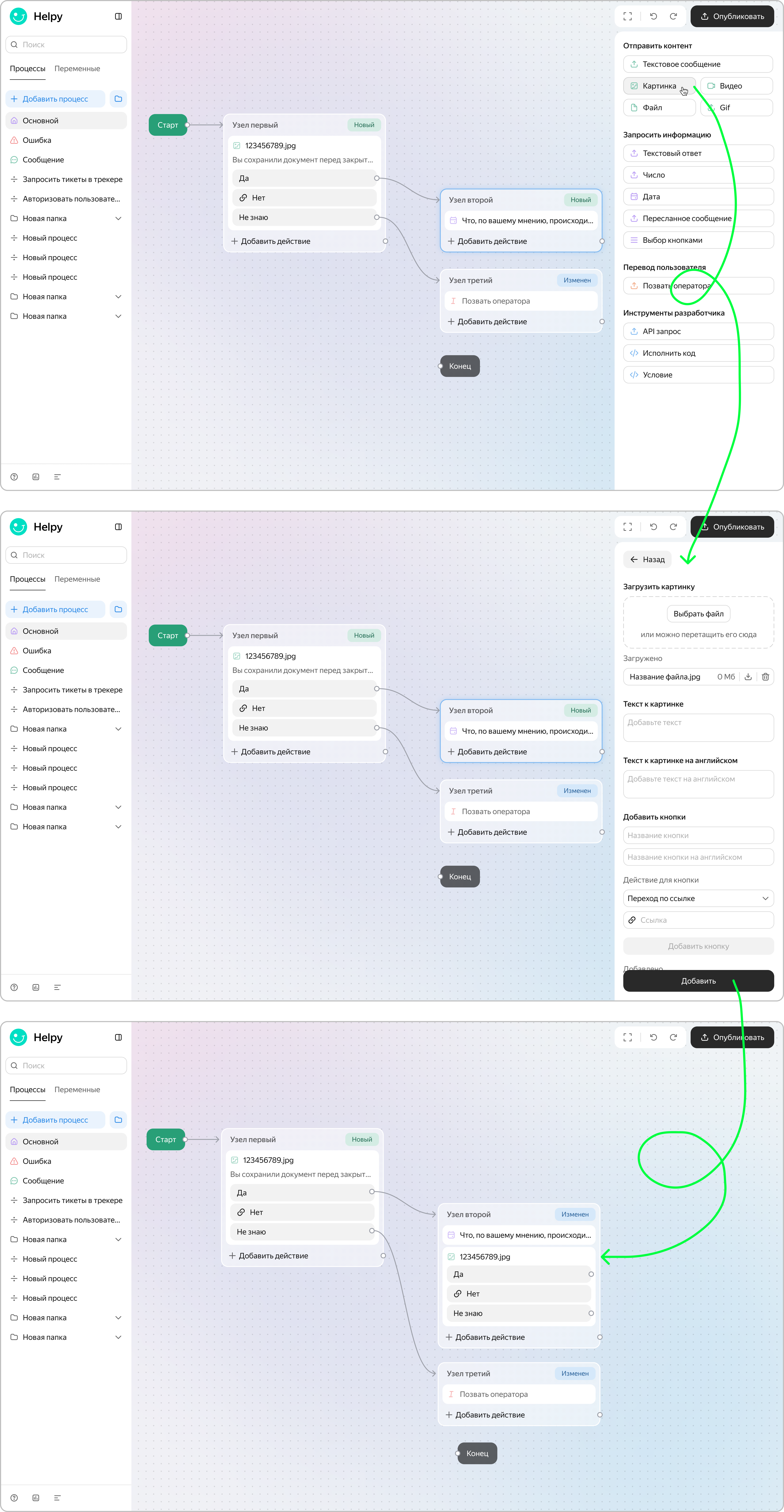
The goal of the project was to create a Telegram bot builder for Yandex internal services. The tool needed to let teams create, configure, and evolve bots independently, without involving developers. For the MVP, we chose the existing Helpy bot — an internal employee assistant that answers questions about work processes, corporate services, and company policies. The main audience for the builder was content managers: users who deeply understand the product’s content but rarely have technical skills. Because of that, the key challenge was to design a clear no-code interface that could support complex bot logic without requiring users to work with code.

PROBLEM
At the start of the project, Yandex already had a solution for creating bots, but over time it could no longer support the growing needs of internal teams. The main issues were connected to both user experience and the platform’s technical limitations: the interface did not scale for large scenarios — some bots contained more than 2,200 blocks, with no search or reusable logic; the content team could not maintain and evolve bots independently, so even small changes required developer support; several scenarios relied on workarounds and fragile fixes; further development was slowed by an outdated stack and accumulated technical debt; teams had no simple way to quickly create a new bot for their needs; information security had no unified control over bots inside the company; and integrations with Yandex 360 services were not supported. As a result, creating and maintaining bots became slower, more expensive, and required too many people in the process.
RESEARCH
To design the builder, I analyzed existing chatbot creation tools and compared them by key features and usage scenarios. Together with the product manager, we also mapped the customer journey for creating and maintaining bots. This helped us identify the core user needs and define the MVP boundaries. Based on the research, we shaped the first feature set for launch, while deliberately moving some scenarios into future product iterations.


KEY HYPOTHESES
If complex bot logic is split into independent processes, content managers will be able to create, maintain, and scale scenarios more easily without developer involvement. If we add a variable system, users will be able to build more advanced flows with branching, data storage, and external-service integrations without writing code. If we improve navigation and readability in the builder, working with large bots will become faster and clearer even for non-technical users. If we add collaboration and change-control tools, teams will be able to work on bots simultaneously without the risk of losing or accidentally overwriting changes. If advanced functionality can be extended with code only where necessary, the builder will remain accessible to the content team while still supporting more complex automation cases.
RESULT
The MVP concept was presented to the leadership team, received support from key stakeholders, and was shared with the wider team. After approval, the solution was handed over to development and became the foundation for the platform’s further evolution.



CASE STUDIES
ARE AVAILABLE ON DESKTOP